AI content marketing cost in 2026
An AI writing subscription can cost less than dinner. A content system that researches, edits, publishes, distributes, and measures useful work costs far more because the software is the smallest part of the job.
By Ilya Kostin · 19 September 2026
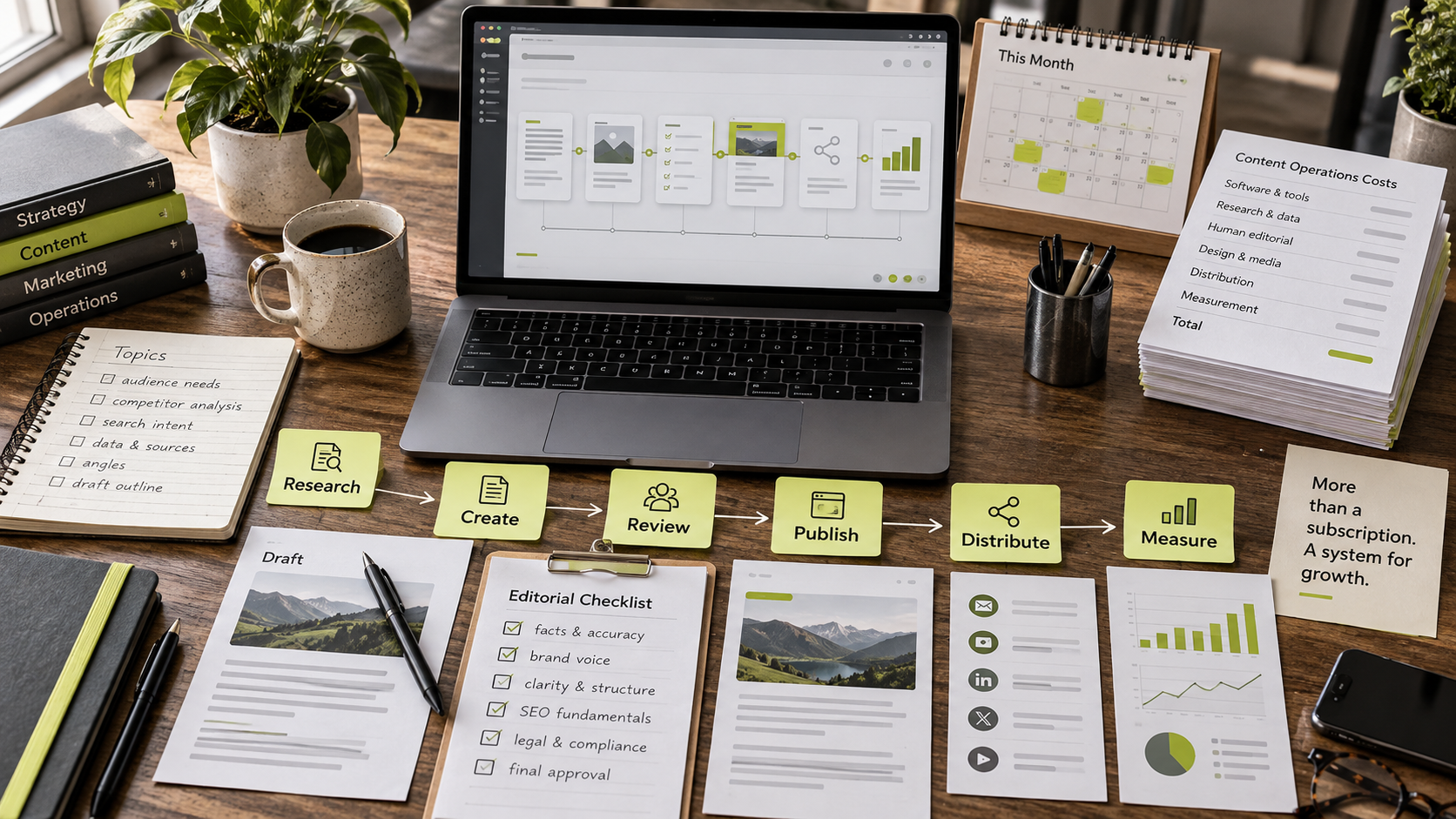
For a US small business, the useful comparison is between three buying models: tools operated by your team, an agency retainer, and a managed system installed around your business. The right number depends on who owns the research, judgment, publishing, and maintenance.
The short answer
DIY software is the cheapest cash option and the most expensive in staff time. A traditional agency buys labor each month. A managed system combines an initial build with ongoing operation.
DATIK publishes its own price so the comparison has a fixed point. The Content Engine costs $3,900, includes six months of operation, and then costs $990 per month. Client-side API and tool expenses usually run $150 to $500 per month across all three DATIK systems, not content alone. Those figures were checked against the DATIK price file on September 19, 2026.
We publish that number because “contact us for pricing” makes the rest of a cost guide fairly useless.
What a content budget actually buys
A useful content operation has at least six jobs. Someone has to identify the buyer question, find reliable sources, draft the answer, check the claims, publish it correctly, and measure whether it helped. A generator covers part of the drafting job.
This distinction explains why two proposals that both promise “four AI articles a month” can differ by thousands of dollars. One may deliver four documents. The other may include interviews, original data, internal links, schema, graphics, publishing, Search Console review, and updates after the page starts receiving impressions.
Ask vendors to put those jobs in writing. If a step has no owner, it becomes your work.
Three ways to pay
Tools operated by your team
This model fits a company with an editor or marketer who already understands the customers. The business pays for writing, research, SEO, image, and workflow tools. It also pays with employee hours.
The hidden cost is review. A fluent draft can contain a wrong product claim, a stale regulation, or a source that never supported the sentence. Google’s guidance on generative AI content says that using AI is not the issue; producing many pages without added value can violate its scaled-content policy.
A monthly agency
An agency supplies people and a process. The proposal should state the number and type of assets, research method, revisions, publishing responsibility, and reporting. Ask whether the agency interviews your staff and whether you keep the source files if the engagement ends.
Retainers are easier to start than installed systems, but the knowledge may remain inside the agency. When the contract stops, production often stops too.
An installed and managed system
This model pays for setup first: access, templates, source rules, editorial gates, publishing connections, measurement, and documentation. Monthly work keeps the system running and updates it when search platforms or models change.
The economic test is simple. After six months, does the business own a working process, its content, and its configuration? DATIK’s ownership terms answer yes. Use the same question with any provider.
Cost drivers that matter
Regulated topics cost more to review than a restaurant guide. Original research takes longer than a summary. A site without a usable publishing system needs technical work before the first article. Video and custom data raise production cost. Multiple approvals slow the calendar.
Volume alone is a poor pricing metric. Ten thin pages can cost less and create more risk than one page built from internal data.
What should appear in a proposal
Look for a named owner, delivery calendar, source policy, review steps, revision limits, publishing method, measurement plan, and exit terms. The provider should also separate its fee from third-party software and API spend.
Reject ranking guarantees. Google’s guidance on third-party SEO services explains why nobody can guarantee a number-one ranking.
When the investment is premature
Content is a weak first purchase when customers do not research before buying, the offer changes every week, or nobody can approve factual claims. Fix those conditions first. A company with no clear package or price will produce vague articles because the writer has nothing concrete to say.
Sources and review limits
This article compares operating models. It does not estimate rankings, traffic, or revenue. Software prices outside DATIK change often and should be checked on the vendor’s own pricing page before purchase.
Frequently asked questions
Is AI content cheaper than human-written content?
Drafting is cheaper. Research, review, publishing, and accountability still require people. Compare the full workflow rather than the price of the writing tool.
How long should a content engagement run?
Six months is a practical evaluation window for a new program because publishing, indexing, and accumulating useful search data take time. It is not a promise that rankings will appear within six months.
Who should own the content and accounts?
The client should own the domain, analytics, publishing repository, source files, and tool accounts paid on its behalf.
Compare your current content spend
Bring the tools, retainers, and staff time you use today. We will map them against an installed system line by line, without a ranking promise.
4300 Biscayne Blvd, Miami, FL 33137 · [email protected]