Voice cloning for commercial video: consent checklist
Permission to record a person is not automatically permission to generate new speech in their voice. Define the model, campaign, operators, approvals, expiration, and deletion before the first clone is created.
DATIK editorial team · Reviewed by Ilya Kostin · Sources checked 30 October 2026
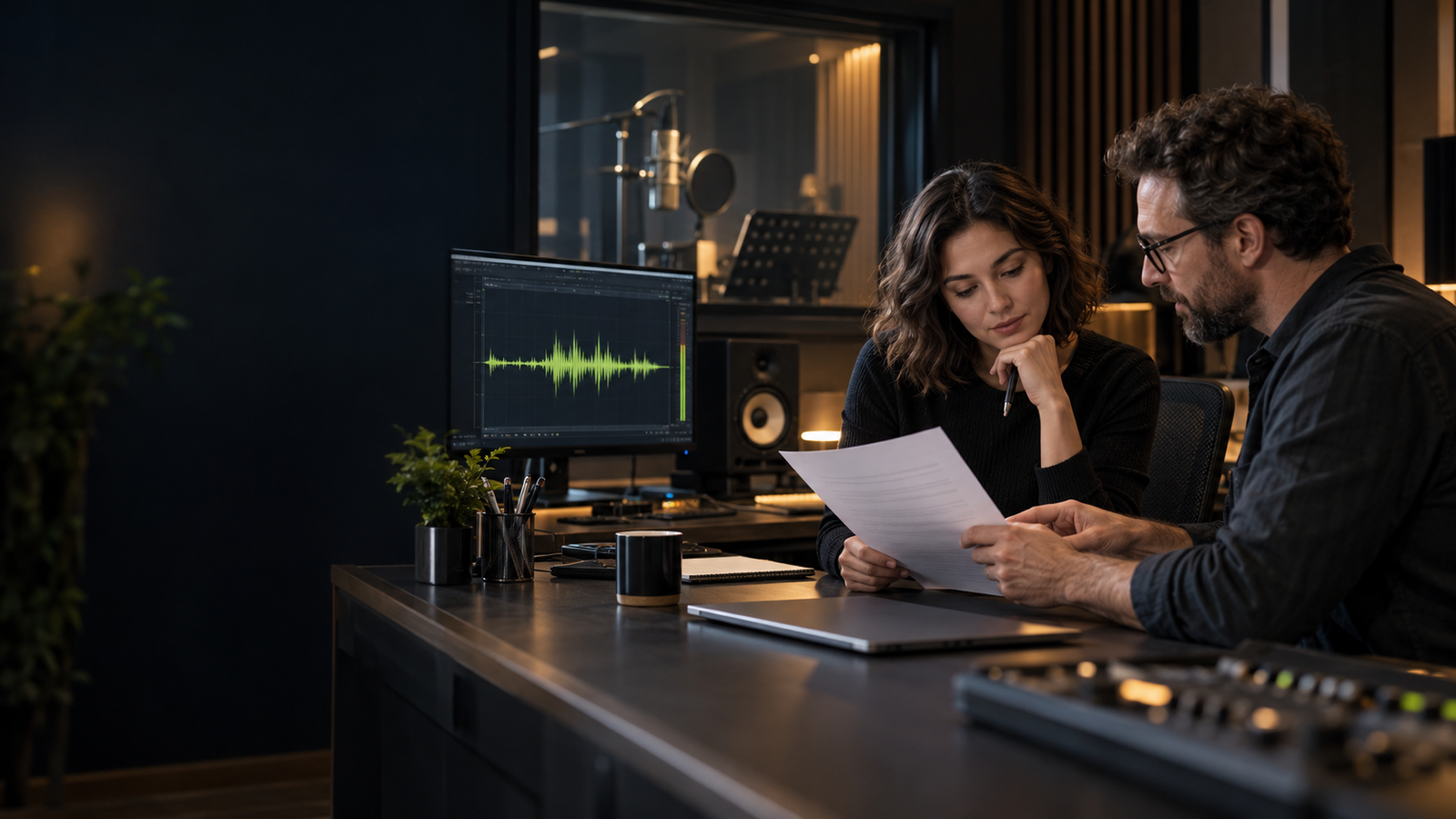
A cloned voice can read a corrected line without bringing the speaker back into the studio. That convenience creates a second asset, though. The production now holds a model that can make the person appear to say words they never recorded.
The release for the original session may not cover that use. A practical voice-clone agreement has to answer who may generate speech, for which campaign, on which channels, for how long, and what happens when permission ends.
DATIK treats a synthetic voice as a licensed production asset. We do not create one from a public interview, a client call, or a video pulled from social media. This guide describes the approval record we would want before using a cloned voice in commercial video. It is operational guidance, not legal advice.
A recording release and a voice-clone release are different
A conventional voiceover agreement covers a performance that already exists. The editor may cut that recording, clean it, and place it in the approved video. Voice cloning adds the ability to generate fresh performances from typed text.
That difference matters. A speaker who approved one 30-second ad did not necessarily approve a reusable narrator that can deliver new prices, claims, languages, or political messages later.
The U.S. Copyright Office's 2024 report on digital replicas describes a voice as separate from the copyright in a particular sound recording. The Office recommended a federal digital-replica right because current protection is a patchwork and has gaps. That recommendation is useful context, but it is not a federal statute that automatically resolves every project.
State publicity and contract rules may apply. Employment or union terms may apply too. The safest production position is narrow written permission reviewed for the campaign and the people involved.
What written consent should identify
The document should name the speaker and the party receiving permission. It should also identify the tool account that will hold the model. A general sentence such as "AI use permitted" leaves too much unresolved.
Define the authorized use in concrete fields:
- The brand, product, campaign, and named production company.
- The approved channels, such as the company website, organic social, paid social, connected TV, or internal training.
- The territory, language, and term.
- Whether the clone may read only approved scripts or also future revisions.
- Whether the client, agency, subcontractor, or platform may generate audio.
- Whether the voice can be shared, exported, or moved to another account.
- The fee, usage renewal, and any limits on media spend or campaign length.
- The approval method for scripts and final exports.
- The stop date, revocation process, and treatment of files after the term.
One more field is easy to miss: prohibited contexts. The speaker may rule out political content, financial claims, medical claims, adult content, endorsements, or speech presented as a live conversation. Write those limits down before the model exists.
Get consent from the person whose voice is used
Client approval is not a substitute for speaker approval. A brand manager may own the campaign and still lack authority to license an employee's, contractor's, founder's, or actor's synthetic voice.
Provider rules reinforce this distinction. ElevenLabs currently prohibits cloning or impersonating a living person's voice without explicit informed consent or another valid authorization. Its Professional Voice Clone process requires the owner to verify the voice. The platform's documentation says one person cannot create another person's Professional Voice Clone, even with consent. The voice owner must create and verify it, then share it through the supported workflow.
Descript defines an AI Speaker around a consenting speaker and requires permission for training and synthesis. Its terms also prohibit submitting unauthorized recordings or reading a consent statement while imitating someone else.
Those checks are useful. They do not replace the production agreement. ElevenLabs notes that technical verification confirms participation in the verification step, not the full legal scope of every later use.
Separate model creation from campaign approval
Consent to build the model should not silently become permission to publish every output. Use two gates.
The first gate covers model creation. The speaker reviews what source audio will be uploaded, where the model will live, who can access it, and when it will be deleted or disabled.
The second gate covers the campaign. The speaker or authorized reviewer sees the final script and the final audio in context. A line that looks harmless in a spreadsheet may sound like a personal endorsement once it is spoken in a recognizable voice.
For recurring work, record approval by version. Store the script hash or dated PDF, generated audio file, final video, approver, and approval timestamp together. Do not rely on a chat reaction with no connection to the final export.
The speaker should hear the final voice
Synthetic speech can change more than pronunciation. Pacing, emphasis, emotional tone, and sentence grouping affect meaning. A generated disclaimer read quickly may be technically present and still fail its job. A neutral line can sound enthusiastic enough to imply endorsement.
Review the finished audio against the approved script. Then review it inside the finished video. Check names, prices, dates, claims, dosage or financial language, and any phrase the speaker would not say naturally.
If the voice starts to sound like a different performance, stop editing by prompt. Bring the speaker back for a rerecord or ask for a new approval. A human pickup session is often cheaper than arguing about the boundary later.
Protect access to the model and source recordings
The clone should not sit in a shared account used by the whole marketing team. Give generation access only to the people named in the production record. Use individual accounts, multifactor authentication, and a project-specific access list where the provider supports them.
Keep the source recordings apart from ordinary campaign media. They can be reused to train another model if copied. The same caution applies to exported audio stems, API keys, and shared voice links.
At wrap, inventory four things: the training audio, the voice model, generated takes, and final approved exports. The agreement should say which items the client receives and which items must be deleted, disabled, or retained for a defined records period.
Do not confuse a video license with calling consent
A voice approved for a commercial video is not automatically approved for outbound calls. The Federal Communications Commission confirmed in February 2024 that AI-generated voices fall under the Telephone Consumer Protection Act's restrictions on artificial or prerecorded voice calls. Calls generally require the called party's prior express consent, subject to the statute and recognized exemptions. Telemarketing calls can require prior express written consent.
This is a separate consent question. Permission from the voice owner does not grant permission to call a consumer. Permission from a consumer to receive a call does not grant permission to clone the speaker.
If a video campaign may later expand into phone, voicemail, or conversational-agent use, treat that as a new legal and production review. Do not add it to the media plan by assumption.
Watch for implied endorsements
A recognizable voice can make a message feel personal even when the script never says "I recommend this." The Federal Trade Commission's endorsement guides focus on what consumers are likely to understand from the advertising, not only the exact words used.
Ask whether the finished video makes the speaker appear to use, approve, or personally stand behind the product. If so, the production needs the appropriate endorsement permission and claim review. A disclaimer cannot repair a use that the speaker never authorized.
This is one reason DATIK would not clone a celebrity-like, executive, customer, or employee voice from found audio. A licensed stock voice or a newly designed synthetic voice may be the cleaner choice when the campaign does not need a real person's identity.
Use this approval checklist before generation
- The voice owner has been identified and has signed a clone-specific permission.
- The brand, campaign, channels, territory, language, and term are written down.
- New-script rights and script-approval rights are explicit.
- Prohibited subjects and implied-endorsement limits are explicit.
- The provider permits the intended cloning and sharing method.
- The model account, operators, and subcontractors are named.
- Source audio and model access are restricted.
- Every generated line receives pronunciation, claim, and context review.
- The final export receives dated approval.
- Expiration, revocation, deletion, and records handling are documented.
- Any later use in calls, agents, or new campaigns receives a separate review.
A missing answer is a production stop, not a detail to settle after publication.
When DATIK would choose a different voice
Voice cloning fits repeatable narration when the speaker wants the model, the usage is narrow, and the approval process can keep up with revisions. It is a poor fit when the speaker is unavailable for consent, the campaign depends on a personal testimonial, or the client wants unrestricted future use.
The alternative may be a fresh human session, a licensed library voice, or a synthetic voice that does not copy a real person. The choice depends on the message, budget, and rights record. Similarity is not the only quality test.
Sources and review limits
- U.S. Copyright Office: Copyright and Artificial Intelligence, Part 1, Digital Replicas
- FCC: Declaratory Ruling on AI-generated voices and the TCPA
- FTC: Guides Concerning the Use of Endorsements and Testimonials in Advertising
- ElevenLabs: Prohibited Use Policy
- ElevenLabs: Voice cloning and verification
- Descript: Terms of Service, AI Speakers
Sources and provider policies were checked on 30 October 2026. Rules differ by jurisdiction and can change. Have qualified counsel review the agreement for the actual campaign.
Need a consent-controlled production plan?
Book a DATIK diagnostic to map the voice rights, access controls, approvals, and delivery files before a model is created.
Frequently asked questions
Is verbal consent enough to clone a voice?
For commercial work, DATIK would require written permission tied to the actual model and campaign. The agreement should be reviewed for the people, jurisdictions, and contracts involved. A provider's verification step does not define the full commercial license.
Can a client reuse the voice clone in later videos?
Only when the agreement grants that use. A single-video approval and a reusable voice license are different scopes. New products, channels, territories, languages, and scripts may require a new approval.
Can we clone a founder or employee from existing company videos?
Existing access to the recording does not prove permission to create new speech. Obtain informed written consent from the person and follow the provider's verification process before uploading source audio.
Does disclosure make an unauthorized clone acceptable?
No. Disclosure can help an audience understand synthetic media, but it does not create permission from the voice owner or cure a misleading endorsement.
Map the voice rights before generation
Bring the speaker, campaign, channels, scripts, provider, operators, term, and approval owner. We will identify the missing permissions and delivery records before a model is created.
4300 Biscayne Blvd, Miami, FL 33137 · info@datik.click